Due Diligence Inspection Checklist for Commercial Buyers
A commercial due diligence checklist is a systematic, documented evaluation of a property's physical condition, building systems, compliance status, and financial sustainability that commercial property buyers must complete before purchasing to identify defects, liabilities, and required repairs. Whether you're acquiring a retail property in Edmonton, an office building in Calgary, or an industrial facility in Red Deer, conducting thorough commercial property inspections in Edmonton is essential to making an informed investment decision. This comprehensive guide walks you through every critical component of a proper commercial due diligence checklist, aligned with industry standards like ASTM E2018 and the Certified Commercial Property Inspectors Association (CCPIA) Commercial Standards of Practice.
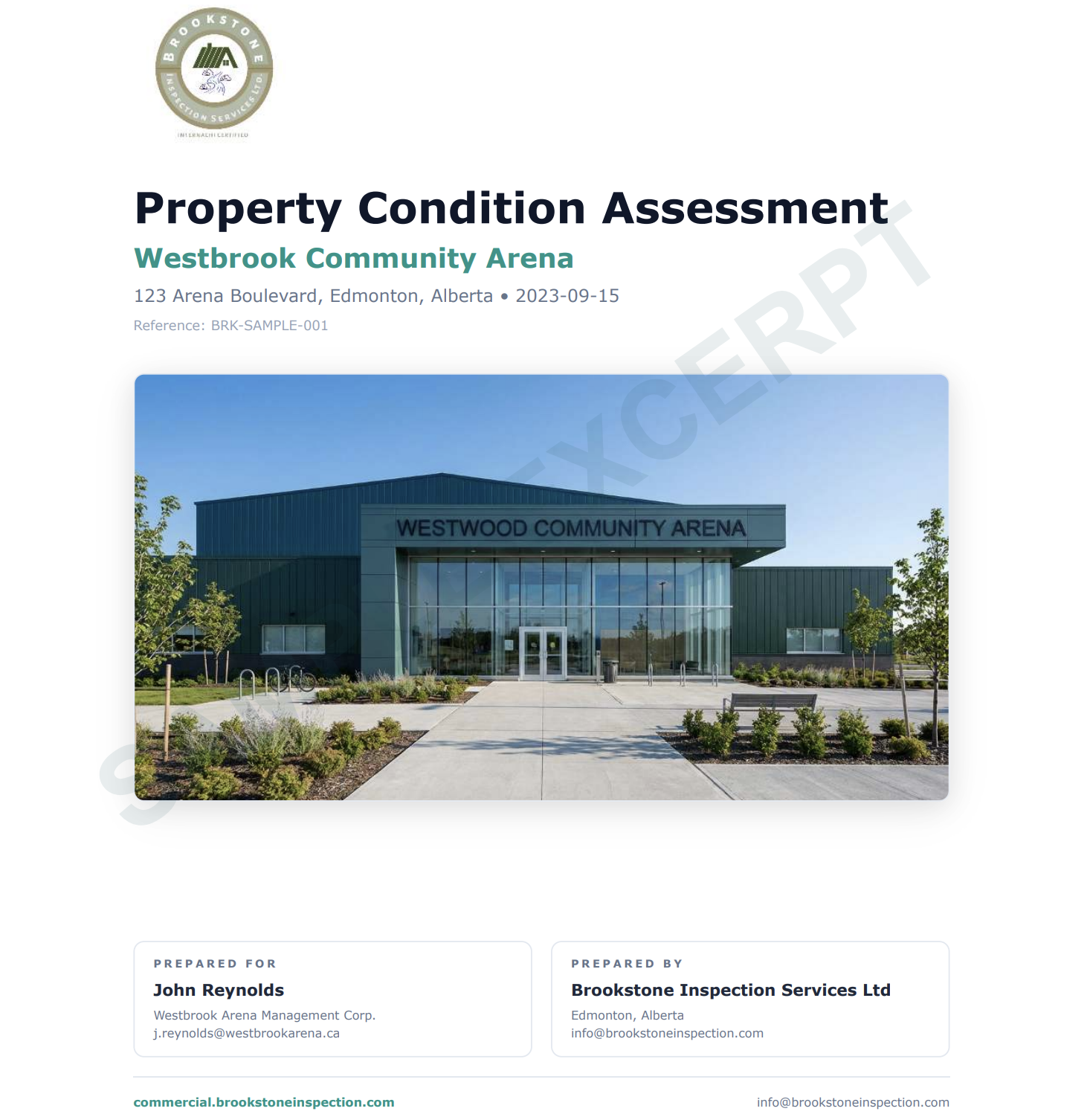
Need a Commercial Property Inspection or Property Condition Assessment?
Brookstone Inspection offers Commercial Property Inspection or Property Condition Assessment. Request a Commercial Property Inspection or Property Condition Assessment Quote
Key Takeaways
- A complete commercial due diligence checklist protects your investment by identifying hidden defects, deferred maintenance, and code violations before purchase
- Alberta's Real Estate Act requires commercial buyers to conduct due diligence during inspection periods; documentation is critical for legal protection
- Structural, mechanical, electrical, plumbing, and life safety systems must be thoroughly evaluated using standardized inspection protocols
- Environmental assessment, accessibility compliance, and regulatory adherence form the foundation of risk mitigation for commercial acquisitions
- Professional commercial inspections combined with specialized reports (PCA, Phase I ESA) provide comprehensive due diligence documentation
- Building envelope, roof condition, HVAC efficiency, and deferred maintenance estimates directly impact property valuation and long-term operating costs
What Is a Commercial Due Diligence Inspection Checklist and Why Does It Matter?
A commercial due diligence checklist is far more than a simple list of inspection tasks—it's a structured, legally defensible framework for evaluating every significant aspect of a commercial property before you commit capital. Unlike residential inspections, commercial properties present unique complexities: multiple building systems, tenant-related concerns, code compliance issues, environmental liabilities, and financial implications that can represent millions of dollars in unforeseen costs.
In Alberta, commercial buyers operate under the Alberta Real Estate Act, which requires that offers include an inspection period during which you can conduct due diligence investigations. This legal framework emphasizes that proper documentation and professional assessment protect both buyer and seller interests. A comprehensive checklist ensures that nothing critical is overlooked—from visible deficiencies to hidden liabilities that only become apparent through systematic inspection.
The checklist serves three critical purposes:
- Risk Identification: Uncovers structural damage, deferred maintenance, system failures, and code violations that affect property value and operating costs
- Negotiation Documentation: Provides objective, professional evidence of required repairs, allowing you to negotiate price reductions or request seller remediation
- Legal Protection: Creates a documented record demonstrating that you exercised reasonable care in your purchase decision, protecting you from future liability claims
Understanding the Alberta Real Estate Act and Commercial Inspection Requirements
Commercial property transactions in Alberta are governed by the Alberta Real Estate Act, which provides buyers with specific rights and obligations regarding inspection periods and due diligence activities. Understanding these legal requirements is foundational to conducting a proper inspection checklist.
Inspection Period Rights Under Alberta Law
The Alberta Real Estate Act allows commercial buyers to include an inspection period in their purchase agreement—typically 10-21 days, though this is negotiable. During this period, you have the legal right to engage qualified professionals to conduct thorough inspections of the property. This is not a casual walk-through; it's a formal investigation period where your team can access all building systems, mechanical rooms, roof areas, and tenant spaces.
Documentation and Professional Standards
Alberta recognizes inspections conducted to ASTM E2018 standards (Property Condition Assessment) and CCPIA Commercial Standards of Practice as meeting the professional due diligence threshold. When disputes arise or property defects emerge post-purchase, having documentation demonstrating compliance with these recognized standards significantly strengthens your legal position.
Specific Commercial Inspection Requirements in Alberta
- Professional inspectors must hold appropriate credentials (CCPIA membership, APEGA registration for certain systems)
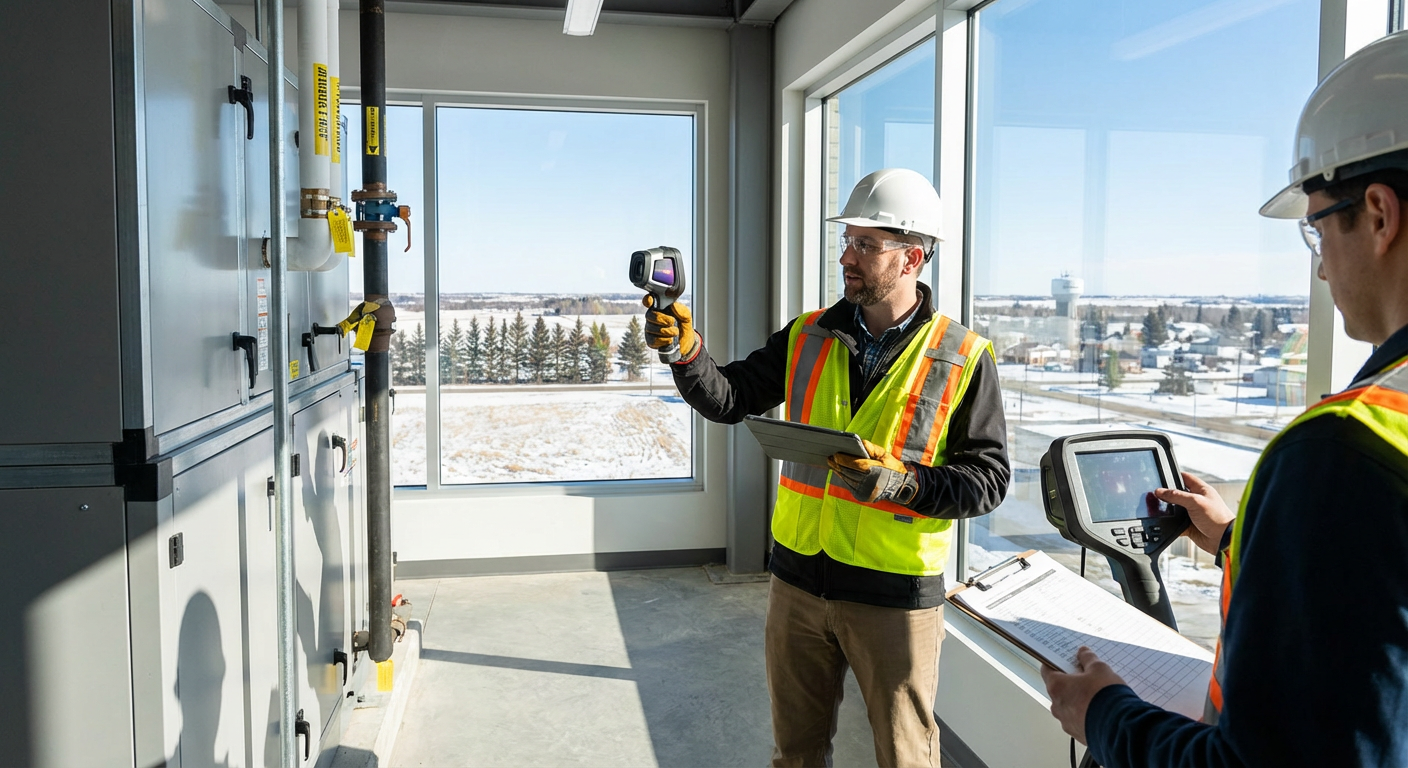
- All major building systems require assessment using equipment (moisture meters, infrared imaging, structural load testing where applicable)
- Environmental Phase I ESA should precede physical inspection for any property with industrial history or hazardous materials concerns
- Tenant lease review must accompany physical inspection for income-producing properties
- Capital Reserve Forecasting is increasingly required by lenders and institutional buyers
Section 1: Structural Integrity and Building Envelope Assessment
Exterior Walls and Foundation Evaluation
The building envelope—exterior walls, foundation, windows, and roofing—is your property's first line of defense against Alberta's harsh climate. Your due diligence checklist must systematically evaluate:
- Foundation Conditions: - Visual evidence of settling, cracking, or differential movement
- Water intrusion signs (staining, efflorescence, moisture)
- Basement or lower-level flooding history
- Drainage adequacy around foundation perimeter
- Presence of sump pump systems and their operational status
- Soil grade and slope—water should slope away from building
- Exterior Walls: - Brick, stone, stucco, or composite material deterioration
- Joint and sealant failures (caulking, mortar)
- Evidence of water penetration or efflorescence (white mineral deposits)
- Cracks exceeding 1/4 inch width or showing pattern damage
- Masonry unit spalling or displacement
- Expansion joint integrity and movement capacity
- Windows and Doors: - Glazing seal failures (condensation between panes indicates compromised insulation)
- Frame corrosion or wood rot
- Weather stripping condition and thermal performance
- Operational functionality (locks, latches, smooth operation)
- Frame penetration properly sealed against building envelope
- Roof Assessment: - Membrane type, age, and remaining useful life
- Visible deterioration, blistering, granule loss, or pooling water
- Flashing integrity around penetrations (vents, HVAC units, chimneys)
- Roof drains functionality and cleanliness
- Evidence of previous leaks or repairs
- Structural support and load-bearing capacity
Interior Building Systems and Conditions
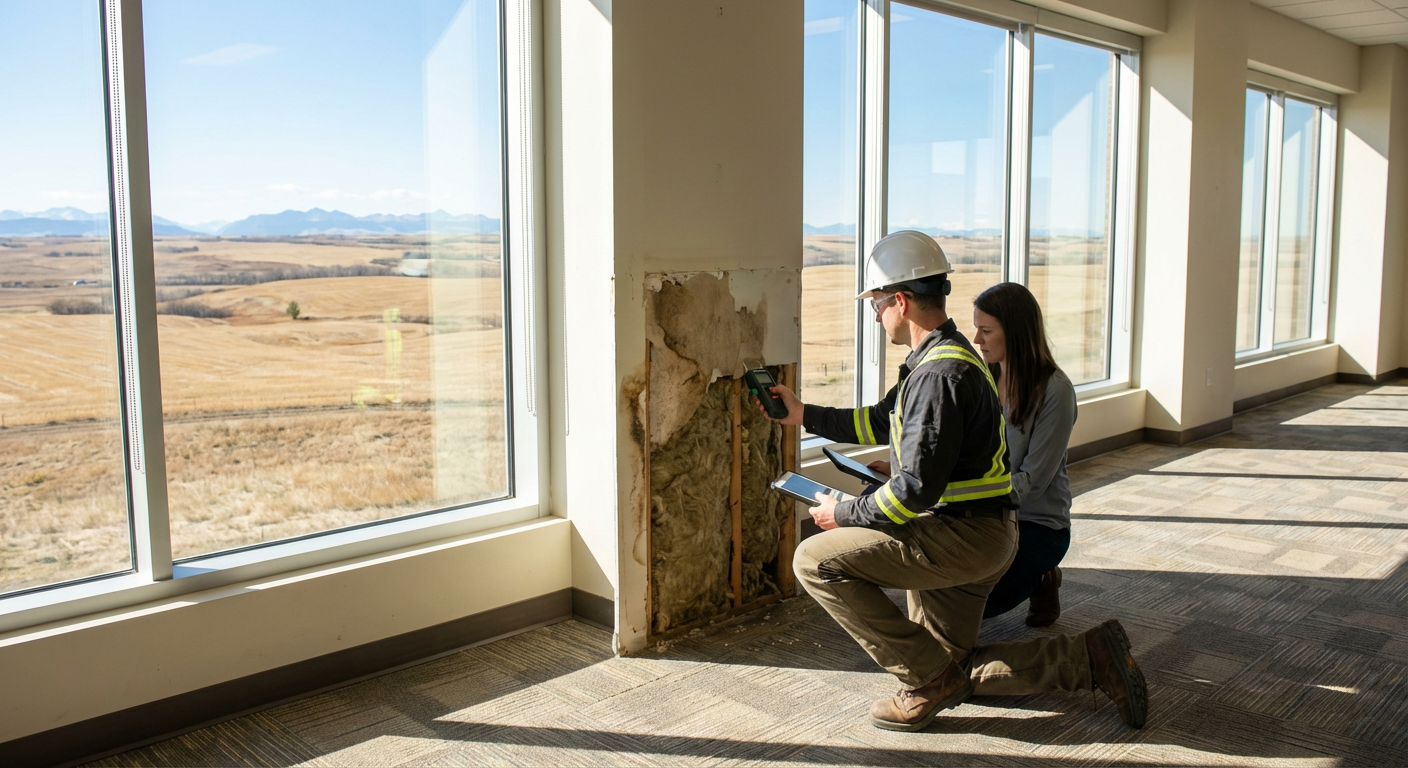
- Ceilings, Walls, and Flooring: - Water stains indicating historical or ongoing leaks
- Drywall or acoustic ceiling damage, mold, or deterioration
- Flooring condition (tile, carpet, concrete) and wear patterns
- Paint or finish condition and hazard assessment (lead-based paint in properties built pre-1978)
- Accessibility compliance (clear pathways, appropriate slope)
- Interior Partitioning: - Load-bearing wall identification and integrity
- Tenant separation wall construction (fire-rated assemblies for multi-tenant properties)
- Flexibility of spaces for future reconfiguration
- Soundproofing adequacy between units
Section 2: Mechanical Systems and HVAC Evaluation
Heating, ventilation, and air conditioning systems represent 40-50% of operating costs for commercial properties. Your commercial due diligence checklist must thoroughly evaluate these systems because failures or inefficiencies directly impact your bottom line.
HVAC System Assessment
- Equipment Inventory and Age: - Type of system (central air handling units, split systems, individual units)
- Equipment age, nameplate data, and manufacturers
- Service history and maintenance records review
- Remaining useful life estimation (typically 15-20 years for commercial equipment)
- Controls type (pneumatic, electronic, smart building integration)
- Operational Performance Testing: - System startup and shutdown cycles
- Temperature control responsiveness in multiple zones
- Air circulation and distribution balance
- Thermostat accuracy and setpoint achievement
- Humidity control capability
- Emergency backup systems (generator, backup heating)
- Component Condition: - Compressor operation smoothness and noise levels
- Refrigerant lines integrity and insulation condition
- Heat exchanger cleanliness and efficiency
- Filter condition and replacement frequency documentation
- Ductwork inspection (accessible sections for leakage, insulation, cleanliness)
- Outdoor condensing unit condition and clearance
- Energy Efficiency Metrics: - Estimated energy consumption based on system type and age
- Building Energy Code compliance (Alberta Step Code requirements for new/renovated properties)
- Potential for efficiency upgrades (variable frequency drives, high-efficiency units, controls optimization)
Specialized HVAC Inspection Services
For significant commercial acquisitions, your due diligence should include a Mechanical & Electrical Systems Audit conducted by certified technicians. This specialized assessment identifies system optimization opportunities, quantifies efficiency losses, and projects capital replacement timelines.
Section 3: Electrical Systems and Power Distribution Inspection
Main Electrical Service and Distribution
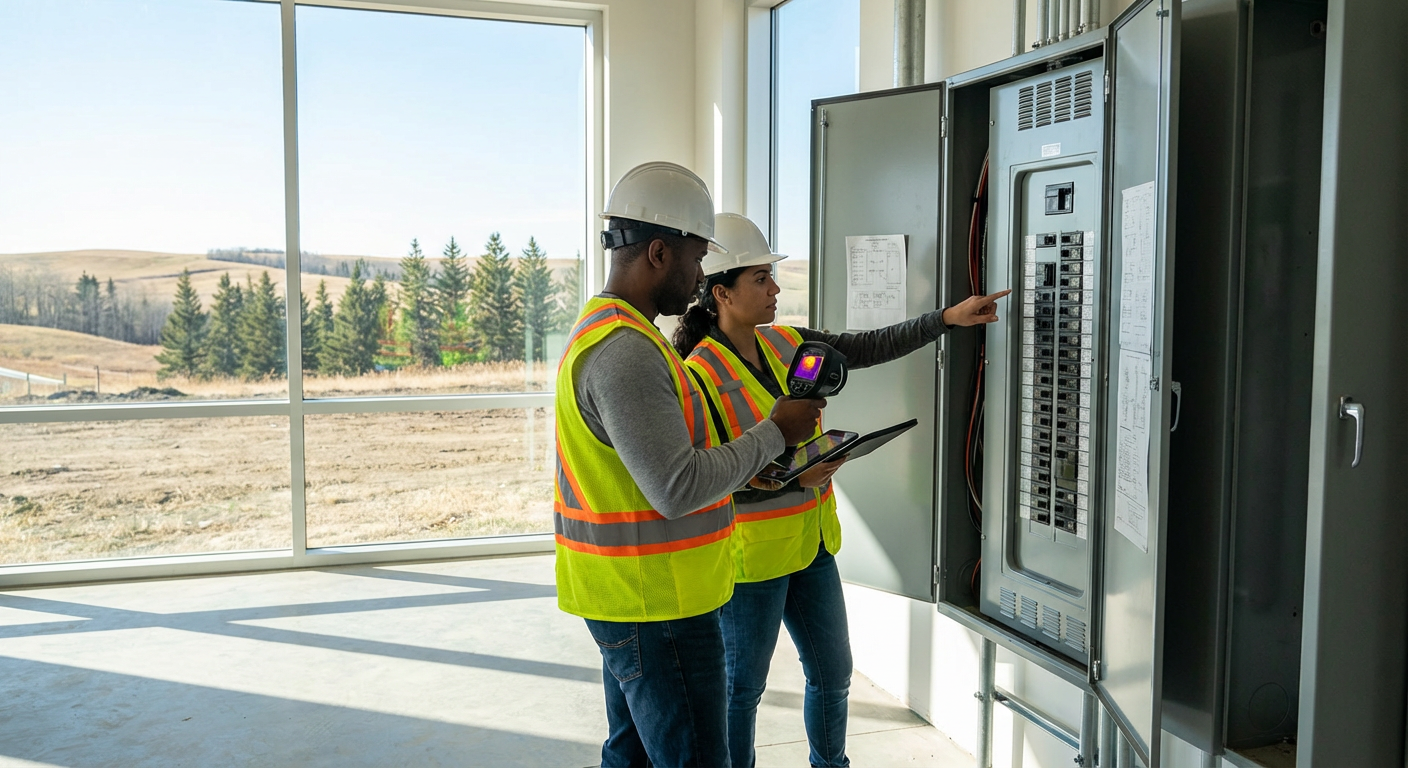
- Service Entrance Assessment: - Service voltage and amperage rating adequacy for current and projected loads
- Panel condition, age, and manufacturer reputation
- Circuit breaker type (Federal Pacific Electric panels, Zinsco panels, or other recalled models require replacement)
- Grounding and bonding integrity
- Service entrance cable condition and protection
- Power Distribution: - Main switchgear condition and functionality
- Transformer condition (oil-cooled units require environmental assessment)
- Distribution panelboards throughout building and by floor/tenant
- Backup generator capacity, age, and fuel supply adequacy
- Automatic transfer switch (ATS) functionality for critical loads
Branch Circuitry and Outlets
- Wiring Methods: - Conduit routing and protection adequacy
- Visible wire damage or deterioration
- Outdated wiring methods (cloth-wrapped, knob-and-tube wiring requires replacement)
- GFCI and AFCI protection compliance
- Arc flash risk assessment for electrical rooms
- Outlet and Device Conditions: - Outlet functionality testing (no reversed polarity, adequate grounding)
- Proper spacing per electrical code
- Outdoor and wet-location protection adequacy
Lighting Systems
- Fixture age, condition, and efficiency (LED conversion opportunities)
- Emergency lighting functionality and battery backup condition
- Exit sign illumination adequacy
- Occupancy sensor functionality where present
- Fixture mounting security and clearance
Data and Communication Infrastructure
- Cabling conduit routing and capacity for additions
- Patch panel organization and labeling
- Network equipment condition and current technology obsolescence
- Phone systems integration capability
- Video surveillance system condition and monitoring
Section 4: Plumbing and Water Systems Inspection
Water Supply and Distribution
- Service Line and Main: - Water service entry point and meter condition
- Supply line material (copper, PVC, galvanized steel—age and deterioration indicators)
- Pressure regulation and backflow prevention devices
- Shut-off valve accessibility and functionality
- Water quality concerns or treatment system necessity
- Interior Distribution: - Visible piping material and condition
- Corrosion or mineral deposits (indicating water quality issues)
- Pipe sizing adequacy for current loads
- Insulation on hot water lines to minimize heat loss
- Expansion tanks and pressure regulators for closed-loop systems
Hot Water Systems
- Water Heater Assessment: - Type (tank vs. tankless) and fuel source (natural gas, electric, solar)
- Age and remaining useful life (typically 10-15 years for tank heaters)
- Capacity adequacy for occupancy and use patterns
- Temperature/pressure relief valve functionality
- Insulation and energy efficiency rating
- Maintenance records and flushing frequency
Drainage and Waste Systems
- Sewage and Storm Drains: - Main building drain condition and pitch adequacy for drainage
- Cleanout locations and accessibility
- Backup history or drainage complaints from tenants
- Grease trap condition (for restaurant or food service properties)
- Backflow preventer compliance
- Septic system evaluation (if applicable outside municipal sewer areas)
- Plumbing Fixtures: - Leak detection (active drips, water damage, mold)
- ADA compliance for accessible fixtures
- Fixture age and remaining useful life
- Water pressure and flow rate adequacy
- Shut-off valve functionality throughout building
Section 5: Environmental Assessment and Phase I ESA
Phase I Environmental Site Assessment (ESA)
Before conducting physical inspection, commercial buyers should commission a Phase I ESA to identify environmental liabilities. This assessment evaluates:
- Historical Property Use: - Previous industrial, manufacturing, or hazardous material use
- Underground storage tank presence or historical documentation
- Environmental liens or regulatory violations
- Nearby contaminated sites affecting groundwater
- Regulatory Compliance: - Current environmental permits and their compliance status
- Regulatory records review (Alberta Environment and Protected Areas database)
- Proximity to protected water sources or sensitive ecosystems
Hazardous Materials Identification
- Asbestos Survey: - Building materials survey for asbestos-containing materials (ACM)
- Friable vs. non-friable asbestos assessment
- Recommended remediation protocols
- Removal cost estimation
- Lead-Based Paint and Lead Pipes: - Testing for pre-1978 properties
- Lead hazard assessment
- Remediation requirements and costs
- PCBs and Electrical Equipment: - Transformer fluid testing
- Ballast replacement requirements
- Regulatory disposal considerations
- Mold Assessment: - Visual inspection for mold growth
- Moisture source identification
- Air quality testing if mold suspected
- Remediation protocol and costs
Section 6: Life Safety Systems and Code Compliance
Fire Protection Systems
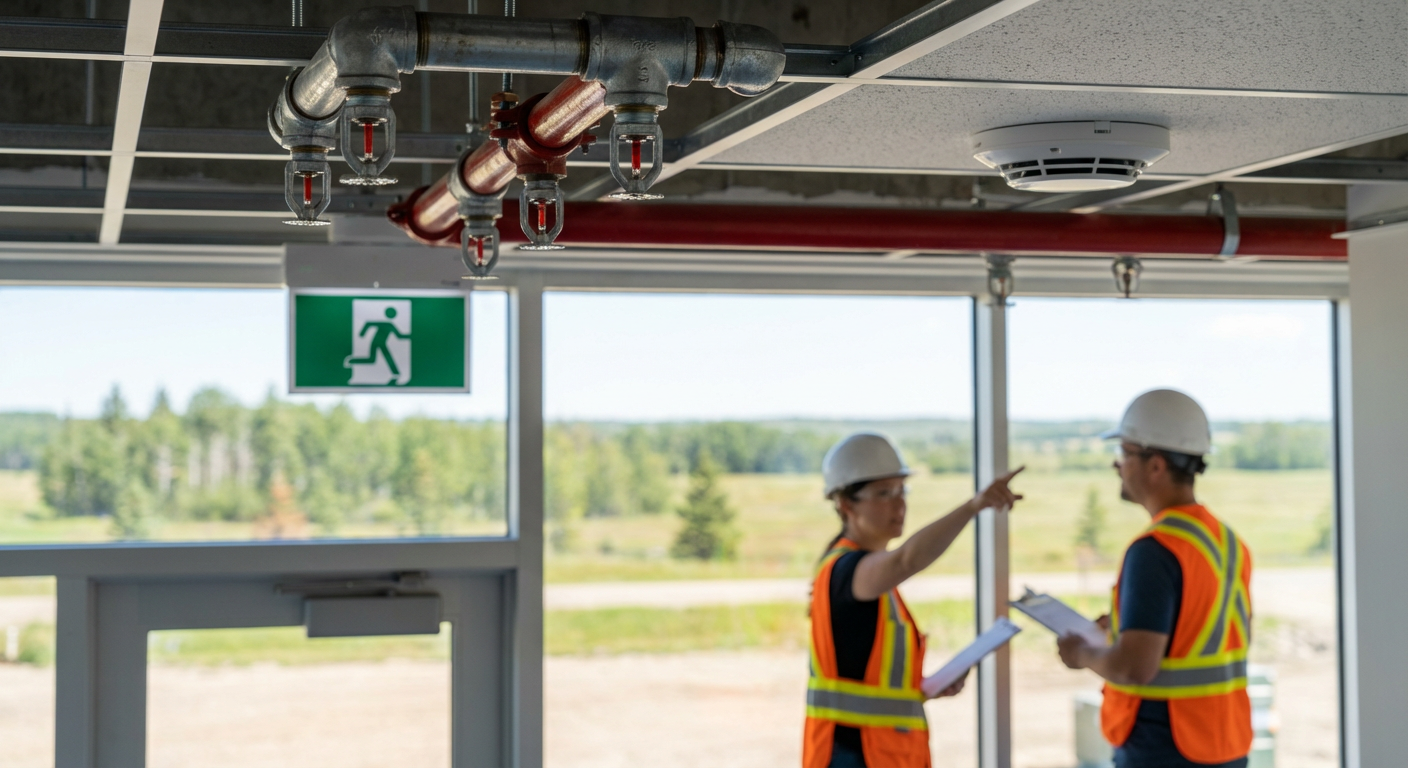
- Fire Suppression Equipment: - Sprinkler system type (wet, dry, pre-action)
- System age, inspection, and certification status
- Coverage adequacy for all occupancy types
- Water supply and pressure sufficiency
- Backflow preventer compliance
- Fire Alarm and Detection: - Detection type (heat, smoke, beam detection)
- Alarm panel condition and battery backup
- Manual pull stations accessibility and spacing
- Alarm transmission to monitoring service
- Testing and maintenance records
- Emergency Egress and Exits: - Exit sign illumination and compliance
- Emergency lighting functionality and battery status
- Exit door hardware proper function (panic bars, magnetic locks)
- Exit route obstruction-free clearance
- Stairwell condition and handrail integrity
Accessibility Compliance
Your due diligence checklist must evaluate compliance with Alberta's Accessibility for Ontarians with Disabilities Act (AODA) equivalents and federal accessibility standards:
- Physical Accessibility: - Ramp slope and handrail compliance (1:12 ratio per code)
- Doorway width adequacy for wheelchair access (32 inches minimum)
- Accessible parking space quantity and location
- Restroom accessibility and fixture height
- Elevator presence and functionality for multi-floor properties
- Accessible route throughout main occupancy areas
- Communication Accessibility: - Signage for elevators, restrooms, exits (tactile and visual)
- Assistive listening systems in public meeting spaces
- Accessible alarm notification (visual and auditory)
Building Code Compliance
Our Alberta Building Code 2023 guide for commercial properties breaks down the 12 core requirement areas to review.
- Occupancy Classification: - Actual use vs. permitted use classification
- Load capacity appropriate for use
- Building area and height limitations compliance
- Setback and parking requirements compliance
- Ventilation and Air Quality: - Outside air intake adequacy per occupancy type
- Carbon dioxide monitoring where required
- Ventilation rate compliance (ASHRAE 62.1 standards)
- Structural Load Capacity: - Floor load ratings adequate for tenant use
- Equipment or machinery support adequacy
- Rooftop equipment support and tie-down
Section 7: Financial and Operational Due Diligence
Beyond physical inspection, your commercial due diligence checklist must include financial and operational documentation review.
Capital Reserve Forecast and Deferred Maintenance
A Capital Reserve Forecast quantifies anticipated replacement costs over a defined period (typically 10-30 years). Your checklist should document:
- Building envelope component lifespan and replacement costs (roof, windows, siding)
- HVAC system replacement and major component costs
- Electrical distribution system upgrades
- Plumbing system replacements
- Parking lot resurfacing and seal coating
- Interior finishes replacement (flooring, walls, ceilings)
Triple Net Lease Assessment
If acquiring a property with tenant leases, commission a Triple Net Lease Assessment to evaluate:
- Tenant lease terms and renewal options
- Responsibility allocation (landlord vs. tenant) for repairs and maintenance
- Expense pass-through provisions and tenant disputes
- Lease compliance and tenant default risk
- Market rate adequacy for current rental rates
Tenant Improvement Condition
If assuming tenant improvements, document:
- Fixture condition and remaining useful life
- Tenant modification authorization and code compliance
- Landlord's obligation to restore at lease end
- Contingent liabilities for tenant-caused damage
Section 8: Pre-Purchase Due Diligence Inspection Components and Deliverables
A professional pre-purchase due diligence inspection by certified commercial inspectors provides comprehensive documentation aligned with CCPIA Commercial Standards of Practice. Your checklist should ensure that your inspection report includes:
Comprehensive Physical Assessment
- Detailed narrative describing building condition
- System-by-system evaluation (structural, mechanical, electrical, plumbing, life safety)
- Photographic documentation of defects, code violations, and deficiencies
- Estimated repair costs for identified issues
- Remaining useful life projection for major building components
Professional Recommendations
- Prioritized repair list (immediate safety hazards vs. deferred maintenance)
- Recommended specialist inspections (Phase I ESA, geotechnical, structural engineering)
- Capital replacement timeline with cost projections
- Energy efficiency upgrade opportunities
- Regulatory compliance recommendations
Specialized Reports Referenced
- Phase I Environmental Site Assessment for environmental liability
- Property Condition Assessment (PCA) per ASTM E2018 for institutional financing
- Mechanical & Electrical Systems Audit for efficiency evaluation
- Opinion of Cost Report for capital replacement budgeting
- Tenant Improvement Condition Report for multi-tenant properties
Section 9: Due Diligence Checklists by Property Type
Different commercial property types require specialized checklist emphasis.
Office Properties
- Focus Areas: - HVAC zone control and occupancy-based operation
- Emergency backup power adequacy for critical systems
- Accessibility compliance for employee workspaces
- Data and telecommunications infrastructure
- Parking adequacy and condition
- Common area maintenance quality
Retail Properties
- Focus Areas: - HVAC dehumidification capability (moisture can damage inventory)
- Storefront windows and entry doors (customer experience and security)
- Loading dock condition and equipment functionality
- Grease trap compliance for food-service tenants
- Signage structural integrity and electrical safety
- Parking lot drainage and maintenance
Industrial Properties
- Focus Areas: - Heavy equipment capability and load capacity
- Dock leveler and door operation
- Environmental compliance (hazardous materials, stormwater)
- Yard/outdoor storage condition and drainage
- Security systems and fence integrity
- Specialized HVAC for process control or dust collection
Multi-Unit Properties (Apartments, Condos)
- Focus Areas: - Unit-to-unit soundproofing adequacy
- Common area maintenance and deferred maintenance
- Fire separation and life safety compliance
- Utility metering (individual vs. building-wide)
- Parking and storage adequacy
- Resident complaint history and chronic maintenance issues
Navigating Commercial Due Diligence in Alberta's Major Markets
Edmonton Commercial Market Specifics
Edmonton commercial properties often feature older building stock with unique due diligence considerations. Downtown and warehouse district properties frequently require environmental assessment due to historical industrial use. Your checklist should prioritize:
- Asbestos survey for pre-1980s properties
- Foundation assessment (historic flooding concerns in certain neighbourhoods)
- Roof condition critical—snow loads and freeze-thaw cycles accelerate deterioration
- HVAC performance verification during heating season
Calgary Commercial Properties
Calgary properties often include modern construction with different risk profiles. Your checklist should emphasize:
- Energy efficiency metrics (newer properties may have unproven systems)
- Building envelope integrity (wind and sun exposure in Calgary's location)
- Storm sewer adequacy (occasional severe weather events)
- Downtown office vacancy concerns and market-driven valuations
Red Deer and Central Alberta
Red Deer properties present unique inspection challenges. Your checklist should address:
- Regional environmental concerns (proximity to industrial facilities)
- Tenant quality and lease stability
- Market valuation volatility
- Infrastructure capacity (water, sewer, roads)
Due Diligence Timeline and Professional Engagement Strategy
Recommended Inspection Timeline
Your commercial due diligence checklist should follow this recommended sequence:
- Days 1-2: Preliminary Assessment - Engage commercial property inspector
- Order Phase I ESA if environmental concerns identified
- Request tenant lease documentation and property management records
- Schedule detailed building access
- Days 3-7: Comprehensive Physical Inspection - Full building inspection (typically 1-3 days depending on size)
- Environmental assessment completion
- Specialized inspections (mechanical audit, electrical evaluation)
- Tenant interviews and unit inspections
- Days 8-10: Report Review and Recommendation - Receive and analyze inspection reports
- Commission specialized assessments if required (structural engineering, geotechnical)
- Financial analysis of capital reserve requirements
- Negotiation of repairs or price reduction
- Days 11-21: Final Due Diligence and Decision - Obtain seller's remediation estimates or bids for required repairs
- Legal review of inspection findings and lease compliance
- Final property walkthrough
- Purchase decision and financing approval
Resources for Comprehensive Commercial Due Diligence
As you compile your commercial due diligence checklist, reference these authoritative resources:
- Commercial Property Inspection FAQ: Essential Questions Answered for Alberta Owners addresses common inspection concerns and interpretation of findings
- What's Included in a Commercial Building Inspection Checklist: A Complete Guide for Alberta Property Owners provides detailed system-by-system checklists
- PCA vs CIR: Which Report Do You Need? Property Condition Assessment vs Commercial Inspection Report distinguishes specialized report types for different transaction needs
- Phase I Environmental Site Assessment: What Commercial Property Buyers Need to Know explains environmental assessment requirements and interpretation
- Commercial Inspection Cost Guide for Alberta: Pricing, Factors & ROI quantifies inspection investment relative to property value and protection
Key Documentation to Collect During Due Diligence
From Seller or Property Manager
- Maintenance records for all building systems (HVAC, electrical, plumbing)
- Capital repair history (roof replacement, system upgrades, major remediation)
- Energy consumption records (utility bills for 3-5 years)
- Tenant lease agreements and rent roll
- Previous inspection or assessment reports
- Building permits and renovation documentation
- Insurance claims history
- Service contracts (HVAC maintenance, cleaning, security)
Generated During Your Inspection
- Detailed inspection report with photographs
- Phase I ESA (if environmental concerns present)
- Specialized system audits (mechanical, electrical)
- Capital reserve forecast
- Tenant improvement condition reports
- Code compliance assessment
- Accessibility evaluation
Frequently Asked Questions
What's the difference between a commercial inspection and a due diligence inspection?
A commercial inspection is a general physical assessment of property condition—evaluating structural integrity, building systems, and code compliance. A due diligence inspection specifically supports purchase decisions and includes comprehensive documentation required to identify defects, negotiate repairs, and protect against post-purchase liability. Due diligence inspections typically encompass environmental assessment, lease review, financial analysis, and specialized system audits.
How long should a commercial due diligence inspection take?
Typical commercial due diligence inspection requires 1-3 full days depending on property size, age, and complexity. A 10,000 sq ft office building typically requires 1 day; a 50,000 sq ft industrial facility requires 2-3 days. Multi-tenant properties require additional time for individual tenant space evaluation. Specialized assessments (Phase I ESA, mechanical audit) add 2-5 days and occur concurrently with physical inspection.
What deficiencies found during due diligence most commonly lead to price negotiation?
The most negotiated issues typically include: roof replacement (often $50,000-$150,000+), HVAC system failure ($30,000-$75,000), structural damage or foundation issues ($50,000-$300,000+), deferred maintenance ($10,000-$100,000), code compliance remediation ($25,000-$500,000), and environmental contamination (unlimited potential liability). Phase I ESA findings frequently trigger price reduction of 10-20%.
Should I require professional inspection even for newer commercial properties?
Yes. Even newly constructed properties benefit from professional inspection to verify builder completion, identify construction defects, confirm code compliance, and document baseline system performance. New properties sometimes have incomplete commissioning or warranty issues that inspection documents for contractor remediation before occupancy.
What's the cost of a comprehensive commercial due diligence inspection in Alberta?
Inspection cost typically ranges from $1,500-$5,000 depending on property size and complexity. Phase I ESA adds $800-$2,500. Specialized audits (mechanical, electrical) add $2,000-$5,000 each. For a property acquisition representing $1-5 million investment, inspection costs represent 0.1-0.5% of transaction value—exceptional insurance against unforeseen capital expenses.
How should I prioritize inspection findings?
Prioritize defects by: (1) immediate safety hazards (electrical hazards, fire code violations, structural compromise), (2) system failures affecting habitability (HVAC inoperability, plumbing failure), (3) code violations requiring regulatory remediation, (4) deferred maintenance affecting long-term property value. Distinguish between immediate repair requirements and long-term capital projects.
Can inspection reports be used to negotiate with sellers?
Absolutely. Professional inspection reports with photographic documentation provide objective evidence of defects, establishing negotiating leverage for repair requests or price reduction. Many commercial transactions include inspection contingencies requiring seller remediation of identified defects or allowing buyer price reduction. Documentation quality directly impacts negotiation effectiveness.
What happens if defects are discovered post-purchase?
Post-purchase defects discovered after closing become buyer responsibility unless you retained contingency provisions in purchase agreement. This emphasizes the critical importance of thorough due diligence—inspection failures are ultimately buyer responsibility. Professional inspection reduces post-purchase discovery risk substantially.
Creating Your Customized Due Diligence Checklist
Every commercial property acquisition warrants a customized due diligence checklist reflecting specific property characteristics, local market conditions, and transaction priorities. Rather than using a generic template, work with professional commercial inspectors familiar with Alberta's regulatory environment, climate-specific building challenges, and local market practices.
Your checklist should evolve as inspection progresses. Initial observations often identify secondary concerns requiring deeper evaluation. A water stain on a ceiling might indicate roof failure, foundation seepage, or past tenant damage—each requiring different remediation approaches and cost implications.
Professional Engagement Approach:
Begin due diligence by engaging certified commercial inspectors experienced with Edmonton, Calgary, Red Deer, or your specific Alberta market. Communicate your acquisition timeline, budget constraints, and specific concerns upfront. Professional inspectors customize their checklist and testing protocols based on property type, apparent condition, and identified risk factors.
Commercial Property Inspections Across Alberta
Professional commercial property inspections serving 43 communities:
- Edmonton Metro: Edmonton, Sherwood Park, St. Albert
- Calgary Metro: Calgary, Airdrie
- Central Alberta: Red Deer, Lacombe
Conclusion: Due Diligence as Investment Protection
A comprehensive commercial due diligence checklist represents your primary defense against expensive post-purchase discoveries. In Alberta's dynamic commercial real estate market, thorough inspection and professional assessment distinguish successful acquisitions from costly surprises.
The investment in professional commercial inspections during your due diligence period—typically $3,000-$10,000—represents insurance against capital expenditures of hundreds of thousands of dollars. Every successful commercial acquisition in Edmonton, Calgary, Red Deer, or anywhere across Alberta began with systematic, documented due diligence.
Your checklist becomes your roadmap through the inspection period, your negotiation evidence with sellers, your financing documentation for lenders, and ultimately your legal protection post-purchase. In real estate investing, knowledge—captured through systematic due diligence—is always worth the investment.